What Makes Classic Country Music Better Than Modern Country for Timeless Storytelling
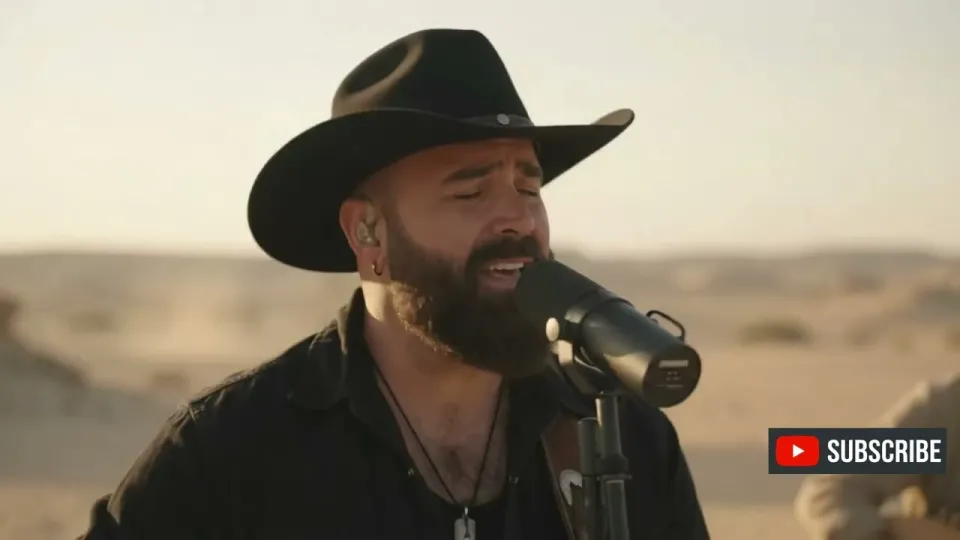
Video: Classic Country Music | Best Country Songs
· based on the channel James
Classic country music is the body of American roots recordings built between roughly the 1940s and the early 1990s, defined by plain-spoken storytelling, acoustic and steel instrumentation, and vocalists who prioritized emotional clarity over vocal acrobatics. It is better than most modern country for listeners who want narrative songs that survive decades of repeated listening, because its production was built around the lyric rather than the hook. That single design choice explains why a Hank Williams track recorded on a single microphone still lands harder than a heavily layered contemporary mix.
Where Classic Country Music Came From and Why It Sounds the Way It Does
Classic country music formed from a specific blend of sources that were never meant to sit together. Appalachian string-band music, British and Irish ballads carried over by settlers, African American blues, and Southern gospel all fed into the earliest commercial recordings of the 1920s. The genre's first national platform was the Grand Ole Opry, which began broadcasting from Nashville in 1925 and turned regional performers into household names.
The instruments followed the economics of the time. Fiddle, acoustic guitar, upright bass, dobro, and pedal steel were affordable, portable, and loud enough for a barn dance without electricity. When electric amplification arrived, the steel guitar and the electric bass moved to the front of the mix, and that combination became the sonic signature of the genre.
Three structural habits separate classic country from most of what followed:
- The lyric carries the song. A verse usually sets a scene, the chorus states the emotional thesis, and a bridge or instrumental break resets the mood.
- The vocal sits dry and forward in the mix. Reverb was used for atmosphere, not to hide pitch problems.
- Songs run two and a half to three and a half minutes, because that was the limit of a 45 rpm single and of radio's attention.
The Artists Who Defined the Classic Country Canon
Classic country music is best understood through its performers, because the genre rewarded distinctive voices over interchangeable ones. Hank Williams wrote and recorded between 1947 and his death in 1953, and songs like "I'm So Lonesome I Could Cry" and "Your Cheatin' Heart" established the template for the confessional country lyric. Patsy Cline's early-1960s recordings, including "Crazy" and "Walkin' After Midnight," proved that a female vocalist could carry a crossover hit without softening her phrasing.
Johnny Cash built a five-decade career on a baritone that sounded like a man reading a letter aloud, and his 1968 live album recorded at Folsom Prison remains one of the best-selling live records in any genre. George Jones was widely regarded by other singers as the most technically gifted vocalist in the field, and Tammy Wynette, Loretta Lynn, and Dolly Parton pushed women's perspectives into the center of the format rather than the margins.
The era also had a working class of professionals who never became famous: Nashville's A-team of session musicians played on thousands of records, and their consistency is a large part of why the catalog holds up.
How the Nashville Sound Changed the Format
In the late 1950s, producers in Nashville deliberately smoothed the genre to compete with pop radio. Known as the Nashville Sound, this approach replaced fiddle and steel with string sections, choral backing, and a more polished vocal presentation. Chet Atkins and Owen Bradley were the central architects, and the results were commercially decisive: artists like Jim Reeves and Eddy Arnold reached audiences that had never bought a country record.
The trade-off was authenticity, and listeners noticed. Traditionalists argued that the genre was being diluted for a market that did not care about it. That argument has repeated in every subsequent decade, which is itself useful context: the tension between commercial polish and roots fidelity is not a modern problem, it is the genre's permanent condition.
The Outlaw Turn and the Return to Raw Production
Outlaw country in the 1970s was a direct reaction to the Nashville Sound's polish. Willie Nelson, Waylon Jennings, Billy Joe Shaver, and Kris Kristofferson wrote and recorded with looser arrangements, rougher vocals, and a rhythm section that owed as much to rock as to honky-tonk. Jennings' 1976 album "Are You Ready for the Outlaw" and Nelson's "Red Headed Stranger" from 1975 demonstrated that stripped-back production could sell millions of copies.
This period matters for anyone building a classic country playlist, because it marks the point where the genre split into two durable lanes: a radio-friendly contemporary stream and a roots-oriented stream that still draws on the same songwriting values.
What to Listen for When Evaluating a Classic Country Recording
Classic country music rewards active listening, and a few technical markers separate a genuine classic from a period piece. Use this checklist:
- Vocal placement: is the singer dry and centered, or buried under reverb and stacked harmonies?
- Instrument roles: does the steel guitar answer the vocal line, or is it decorative filler?
- Lyric specificity: does the song name a town, a job, a brand, or a time of day, or does it stay abstract?
- Dynamic range: does the arrangement leave space between verses, or is every second filled?
- Song length: does it end when the story ends, rather than after a repeated chorus?
A recording that scores well on all five tends to age better than one that only scores on production value.
Building a Playlist That Actually Works
A classic country playlist fails when it is organized by year alone. Sequence by emotional arc instead. Open with an uptempo honky-tonk track to establish energy, move into mid-tempo story songs, place the heaviest ballad near the two-thirds mark, and close with something resolved rather than devastating.
Practical constraints worth respecting:
- Keep total runtime under 80 minutes if the playlist is meant for a single sitting.
- Mix male and female vocalists within every three or four tracks.
- Alternate between the Nashville Sound polish and the outlaw rawness so the ear does not fatigue on either.
- Include at least one instrumental or near-instrumental track to reset attention.
A compilation like the one assembled by the channel James under the title "Classic Country Music | Best Country Songs" follows this logic, pairing well-known hits with deeper catalog cuts so the listener gets both familiarity and discovery.
Why the Format Still Holds Up in 2026
In 2026, classic country music functions less as nostalgia and more as a reference standard. Streaming has made the entire catalog available at once, which means a listener can move from a 1949 Hank Williams single to a 1975 Willie Nelson album in a single session and hear the through-line immediately. Contemporary artists across Americana, folk, and independent country continue to cite these recordings as their primary influence, and the songwriting conventions they established still govern how a country song is structured.
The genre's durability comes down to cost efficiency in the best sense: a great country song needs a voice, a story, and three chords. Nothing in that formula expires.
The Bottom Line
Classic country music wins on storytelling density, honest vocal production, and songs written to be understood on first listen and re-heard for decades. Its history runs from the Grand Ole Opry's first broadcasts through the Nashville Sound's commercial push and the outlaw reaction that followed, and each phase left recordings that still function as a benchmark. If you want country that prioritizes the lyric over the production, start with the 1940s through the 1970s and work outward. The channel James has assembled a focused entry point in "Classic Country Music | Best Country Songs," which is a reasonable place to begin before digging into individual artist catalogs.
Key takeaways
- Classic country's golden era runs roughly from the 1940s through the early 1990s, spanning Hank Williams, Patsy Cline, Johnny Cash, and George Jones.
- The genre grew from Appalachian folk, British balladry, gospel, and the blues, with the Grand Ole Opry launching in 1925 as its first national stage.
- Nashville's A-team of session players and the 1950s Nashville Sound replaced fiddles and steel with strings and choruses to compete with pop radio.
- Outlaw country in the 1970s, led by Willie Nelson and Waylon Jennings, pushed back against that polished production.
- A three-chord song with a clear verse-chorus structure remains the backbone of most classic country hits.
Questions & answers
What counts as classic country music?
Classic country generally refers to recordings made from roughly the 1940s through the early 1990s, before the genre's modern pop and rock crossover era. It is defined by narrative songwriting, prominent steel guitar and fiddle, and vocals mixed dry and forward. Artists like Hank Williams, Patsy Cline, Johnny Cash, and George Jones are the standard reference points.
Why does classic country sound different from modern country?
The main differences are production and priority. Classic recordings were built around the lyric, with limited overdubbing and a rhythm section that left space between verses. Modern country often layers synthesizers, stacked harmonies, and dense percussion, which pushes the vocal back in the mix and shortens the narrative arc.
What was the Nashville Sound?
The Nashville Sound was a late-1950s production style that replaced fiddle and steel guitar with string sections and choral backing to compete with pop radio. Chet Atkins and Owen Bradley were its central producers, and it helped artists like Jim Reeves and Eddy Arnold reach mainstream audiences. Traditionalists saw it as a dilution of the genre's roots.
How should I sequence a classic country playlist?
Sequence by emotional arc rather than by release date. Open with an uptempo honky-tonk track, move into mid-tempo story songs, place the heaviest ballad around two-thirds of the way in, and close with something resolved. Keep the total under 80 minutes and alternate polished and raw production so the ear does not fatigue.
Source: Classic Country Music | Best Country Songs · Markdown version